Wick Hydroponics
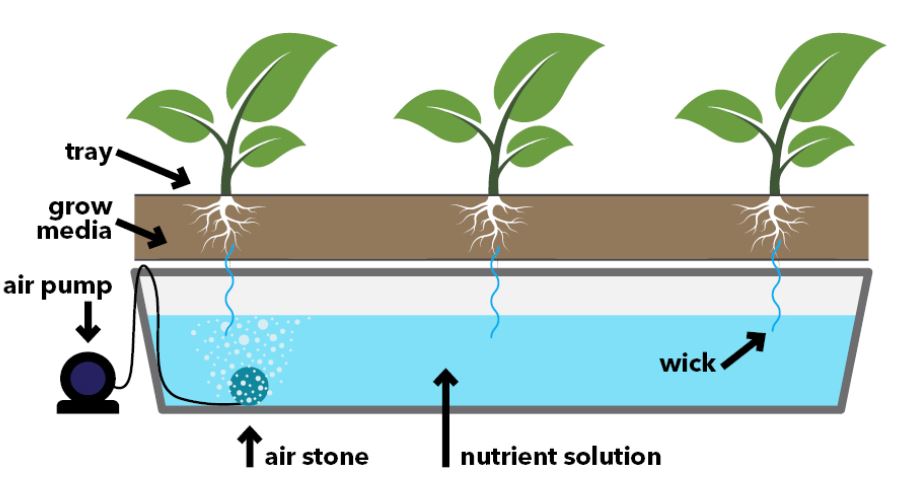
The wick system is known to be the most simple and easy type of hydroponic system, as it doesn’t require us to add any complicated elements such as electricity, pumps, or aerators. When compared with the other hydroponic systems, the Wick system is the only one where there’s no usage of electricity. Wick hydroponic systems are best for home gardens or houseplants or with growing plants that don’t require much water.
Ebb and flow/flood and drain System
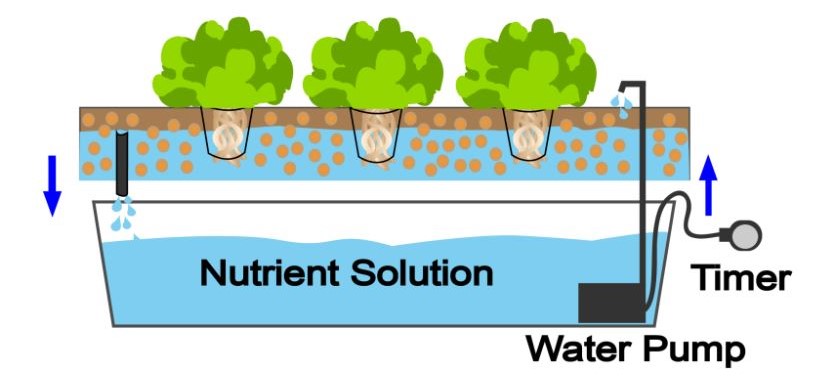
Ebb and flow hydroponic systems is also known as flood and drain, this system is very popular and known amongst home hydroponic gardeners. All types of plants can be grown using Ebb and flow hydroponic systems. However, growing large plants are not recommended as they take up lots of space and this system doesn’t allow it. Also, for the water to reach the roots of large plants, we have to keep in mind the depth of the grow bed.
Drip Hydroponics
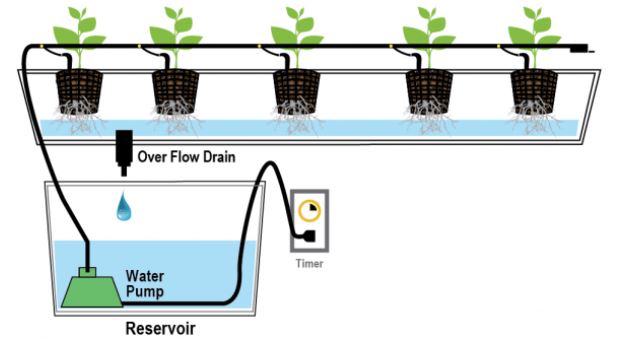
Drip hydroponic systems are best for someone who is in the habit of making changes commonly, as it is easy set up and can be altered in several ways. These systems helps the nutrient rich water solution reach to the base of the plant directly through tubes. Drip hydroponics systems work great for a variety of different plants. As the system set up can be easily altered, it helps to work with variety of plants you want to grow.
Deep Water Culture System

In the Deep water culture hydroponic systems, the air is provided to the roots directly using an air stone or diffuser as in this system the roots are dipped in the nutrient solution. In order to secure the plants, they are placed in net pots. In this system, as the plants are placed in nutrient solution and being are also supplied with air providing them oxygen, they grow like rapidly. Deep water culture works good for all types of plants, however they work best for large plants or for the plants with big roots. You’ll be surprised to observe how crazy the root system gets and how rapidly it happens.
Nutrient Film Technique
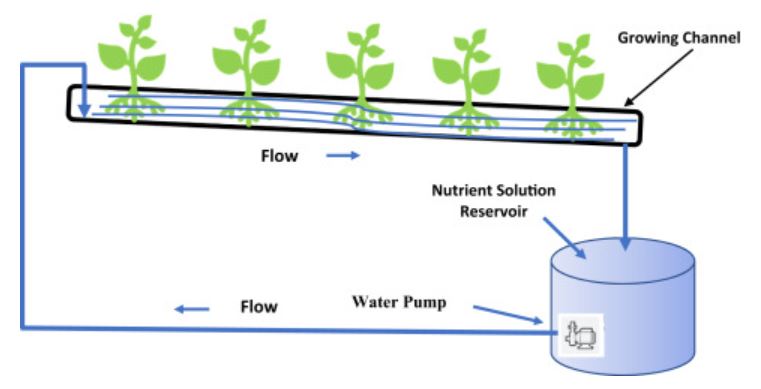
With this hydroponic systems, the nutrient solution is pumped into channels that can hold a varied amount of plants. The channels are slightly sloped, so the nutrient solution flows through the channel, over the plant’s roots dangling roots, and back into the hydroponic reservoir. Due to the size of the channels, NFT hydroponic systems work best for plants that have a small root system, like leafy greens. Of the different kinds of hydroponic systems, NFT hydroponic systems are the most scalable. The simple concept makes it easy to set up a system to grow a lot of plants, which makes it one of the go-to-methods for commercial growers.
Aeroponic Technique
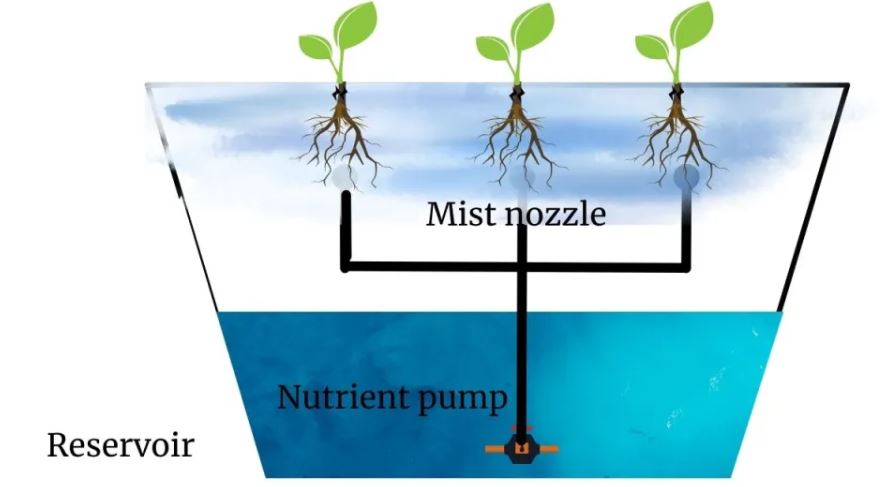
This isn’t the easiest method of hydroponic gardening, but it’s a simple concept. Plants are suspended in the air and nutrient solution is sprayed over the plant’s root system. The nutrient solution is pumped into piping that’s fitted with mist nozzles. As the pressure builds the misters spray the plant’s roots and the solution falls back into the reservoir. You could have a system that looks similar to the one below which looks similar to a Deep water culture hydroponic system but instead of an air stone in the reservoir, you have a water pump. The smaller the solution particle size, the faster the absorption by the plant’s roots. With the right setup, aeroponic hydroponic systems can grow just about any type of plant. The difficulty lies with making sure the mist nozzles are able to spray the entire root system. Plants with larger root systems can make this difficult.